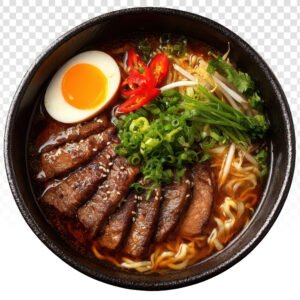
Korean Birria Ramen

Tender Mexican-style birria beef served with ramen noodles in a rich, spicy gochujang-infused consommé, finished with Korean-inspired toppings.
Ingredients
For the Birria Beef
- 2½ lb beef chuck roast, cut into large chunks
- 1 tbsp oil
- 4 dried guajillo chiles
- 2 dried ancho chiles
- 1-2 dried árbol chiles, optional
- 4 Roma tomatoes
- 1 medium white onion, quartered
- 5 garlic cloves
- 3 cups beef broth
- 1 tbsp apple cider vinegar
- 1 tbsp ground cumin
- 1 tsp Mexican oregano
- ½ tsp ground black pepper
- ¼ tsp ground clove
- 1 small cinnamon stick
- 2 bay leaves
- Salt, to taste
For the Korean-Style Broth
- 4 cups reserved birria consommé
- 1 tbsp gochujang
- 1 tbsp soy sauce
- 1 tsp sesame oil
- 1 tsp honey optional
- 1 small garlic clove minced
- ½-1 cup beef broth if needed
For the Ramen
- 4 portions ramen noodles
- 2 soft-boiled eggs
- 2 green onions thinly sliced
- Fresh cilantro chopped
- Sesame seeds
- Jalapeño slices
- Lime wedges
Optional Toppings
- Kimchi
- Korean chili flakes
- Chili crisp
- Thinly sliced cucumber
- Pickled vegetables
Instructions
- Toast the dried chiles: Remove the stems and seeds from the guajillo and ancho chiles. Keep one or two árbol chiles if you want extra heat. Toast the chiles briefly in a dry skillet until fragrant, being careful not to let them burn.
- Soften the chiles: Place the toasted chiles in a saucepan along with the Roma tomatoes, quartered onion, garlic, bay leaves, and cinnamon stick. Add enough water to cover everything. Simmer for approximately 10 minutes, until the chiles have softened.
- Brown the beef: Pat the beef chunks dry and season them with salt and black pepper. Heat the oil in a large Dutch oven or heavy pot over medium-high heat. Brown the beef for about 2–3 minutes on each side. Work in batches to avoid overcrowding the pot.
- Prepare the birria sauce: Transfer the softened chiles, tomatoes, onion, and garlic to a blender. Add the beef broth, cumin, Mexican oregano, cloves, and apple cider vinegar. Blend until completely smooth. Add a small amount of the chile soaking liquid if needed.
- Strain the sauce: Pour the blended chile mixture through a fine-mesh strainer directly into the pot containing the browned beef. Add the cinnamon stick and bay leaves if they were removed during blending. The sauce should come up around most of the beef.
- Cook the birria: Bring the mixture to a gentle simmer, then cover and reduce the heat to low. Cook for approximately 3–3½ hours, or until the beef becomes extremely tender and can easily be pulled apart with a fork. Alternatively, you can finish the birria in a low-temperature oven.
- Shred the beef: Remove the tender beef from the consommé and shred it with two forks. Return some of the shredded meat to the broth and set the remaining beef aside for assembling the ramen. Reserve the consommé—it forms the flavorful base of the ramen broth.
- Make the Korean-inspired broth: Measure 4 cups of the birria consommé and transfer it to a saucepan. Stir in the gochujang, soy sauce, sesame oil, minced garlic, and optional honey. Bring everything to a gentle simmer.
- Adjust the broth: Taste the broth before adding any additional salt. If the flavor is too concentrated or salty, gradually add ½–1 cup of beef broth or water until you reach the desired balance.
- Cook the ramen noodles: Bring a separate pot of water to a boil. Cook the ramen noodles according to the package instructions, taking care not to overcook them. Drain well. Cooking the noodles separately helps maintain a better texture, particularly if you plan to save leftovers.
- Build the ramen bowls: Divide the cooked noodles between four bowls. Ladle the hot Korean-inspired birria broth over the noodles. Add a generous amount of shredded birria beef to each bowl.
- Add the toppings: Finish each bowl with a soft-boiled egg, sliced green onions, cilantro, sesame seeds, jalapeño slices, and a squeeze of fresh lime juice.
- Customize and serve: Add kimchi, Korean chili flakes, chili crisp, cucumber, or pickled vegetables for additional Korean-inspired flavor and texture. Serve immediately while the broth is hot.
Notes
- For a milder bowl, skip the árbol chiles and Korean chili flakes.
- Do not burn the dried chiles when toasting because they can make the consommé bitter.
- Cooking the ramen noodles separately gives them a firmer texture.
- If serving immediately, the noodles can also be cooked directly in the broth.
- The lime juice helps cut through the richness of the birria and balances the spicy broth.
- Leftover birria can be refrigerated and used to make ramen quickly on another day.
- Adjust the amount of gochujang according to your preferred level of spice.